SPSAS MICROPLASTIC

About the School

ESPCA MICROPLASTICO - Logo oficial 2

An intensive and interdisciplinary program training early-career scientists to address the challenges of plastic pollution through research, critical thinking, and evidence-based policy

The São Paulo School of Advanced Science on Microplastics (ESPCA), from September 1st to 11th, 2026, will focus in training young scientists on the topic to be relevant actors on the matter and supporting governmental and diplomatic efforts against plastic pollution. The effort is particularly relevant within the context of the International Treaty on Plastic Pollution, which, once implemented, will be strategic for the environment, health, trade, and the bioeconomy.

This international school brings together senior scientists and young researchers to explore this interdisciplinary, rapidly growing field. The program covers the science of micro- and nanoplastics, their impacts, and current regulatory efforts. Learning occurs via theoretical/practical classes, mentoring, student poster sessions, and field activities.

Advanced Discussions on

Microplastics

The School will be a multidisciplinary platform to raise awareness about Microplastics, covering the science of micro/nanoplastics, their impacts, and current regulatory efforts. Check out the full program.

Speakers
+ 0
Days of Learning
0
Students
0

Target Audience

Master’s, doctoral, and postdoctoral researchers from Brazil and abroad, with training in a wide range of disciplines related to microplastics.

The School will offer 100 vacancies (50% for Brazilians and 50% for foreigners), with affirmative actions (at least half will be for women and 25% for ethnical minorities).


Who can participate?

100 students worldwide will be selected based on an assessment considering the applicant’s research area, academic history, CV, research projects, recommendation letter and fair distribution on gender, ethnicity, and geographical distribution. The primary target audience includes master’s, doctoral, postdoctoral students, and early-career scientists.

Travel, accommodation, food, and travel insurance (for foreign participants) of selected students will be fully funded by FAPESP.

Education

ESPCA cultivates young microplastics scientists and, thus, Brazilian expertise. Our program integrates theoretical and practical classes, mentoring sessions with faculty, student research poster sessions, technical lectures, field activities, and roundtables, providing essential knowledge and career advancement.
Interdisciplinary approach and integrated vision

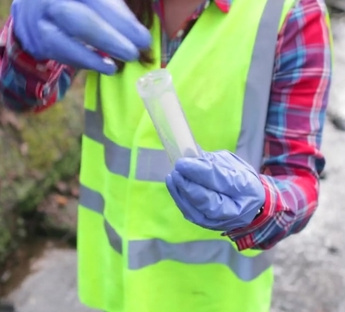
Embrace a multi- and interdisciplinary approach to microplastics research. Gain an integrated vision of complex issues. The School prepares professionals with a holistic understanding for impactful solutions.

Knowledge Exchange and Networking

Connect with global leaders and international peers. Our program fosters collaboration and knowledge exchange through dedicated sessions and "get-togethers," building a strong professional network for impactful future partnerships.

Practical training

Acquire advanced practical skills through hands-on work with cutting-edge analytical equipment (FTIR, Raman, Pyr-GC-MS, Near Infrared). Essential training in data treatment ensures comprehensive research capabilities.
Capacity building (for participation, as a country, in the Global Treaty)

The School aims to build national expertise in microplastics research, ensuring Brazil's training of scientists from all over the Globe to influence their governments and debates with science-driven decision-making.

Raising awareness through Education

Empowering future scientific leaders to become key actors in combating plastic pollution. Through advanced education, the School indirectly raises awareness and equips professionals to guide national and international strategies effectively.

Multidimensional view of microplastics

The School offers a unique multidimensional view of microplastics: "interior" (polymeric properties), "surface" (additives, biofilms, pollutants), "exterior" (environmental impact) and “beyond” (regulation).